Small L-Shaped Modern Kitchen with Warm Wood & Soft Lighting
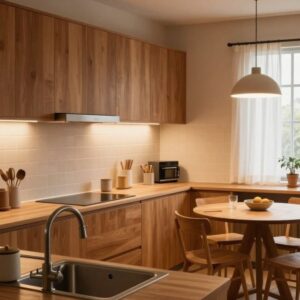
We all know the feeling of being in a small kitchen and wishing for more space, style, and warmth. Every day thousands of homeowners wish the same. But a small kitchen doesn’t have to be claustrophobic. Through clever design, even the smallest of kitchens can become the heart of the house. It’s a combination of three key features: a clever L-shaped layout, the warmth of natural wood, and the magic of soft light.
A small, L-shaped, modern and warm kitchen with soft lighting is not simply a design theme. It is a statement of living that combines utility, aesthetics and comfort in a manner that larger kitchens often cannot.
Whether you’re considering a kitchen remodel or just looking for inspiration to transform your existing kitchen, this comprehensive guide will cover all the details you need to design a kitchen that feels like the heart and soul of your home.
The L-Shaped Layout: Ideal for Small Kitchens
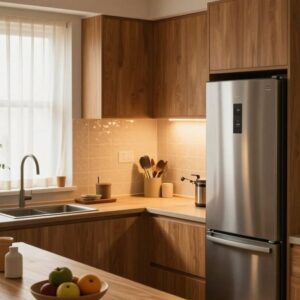
The design of your kitchen is a critical aspect. You can’t decide on the finish or the appliances or the decoration until you have a floor plan that fits your room. Of all the possible kitchen layouts, the L-shaped design is the best option for small to medium-sized kitchens.
This configuration locates the work center, including cabinets and appliances, on two perpendicular walls to create a corner and free up the remaining floor space.
The beauty of this design is that it bundles your workflow together, and keeps the rest of the room open. This allows you to have an open kitchen even in relatively small spaces.
The Work Triangle That Changes Everything
The work triangle is key to a functional kitchen. It involves three main points: the fridge, the sink and the stove. Ideally, the three points should be arranged in such a way that walking from one to the next takes the fewest steps possible and without any barriers in the way. If the kitchen is poorly ergonometric, you may have to cross the room ten or 20 times to cook a single dish. In a more efficient L-shaped kitchen, the three points are conveniently located on the walls to form a small triangle that reduces wasted time and effort on a daily basis.
Ergonomic kitchen design is about more than distance.
It’s about creating a space in which you can cook without straining and stretching, twisting your body in awkward positions or smacking into furniture. It’s all about making cooking enjoyable.
Open Without Added Space
Perhaps the most impressive feature of the L-shaped kitchen is its ability to make the kitchen feel larger. Placing all the elements on two walls leaves one corner clear. This helps sunlight penetrate deeper into the room, makes the room easier to move around in, and creates a more open and airy feel for the kitchen than closed square designs can provide.
To add to this effect, keep countertops as minimal as possible. Objects on a counter reduce the size of the area.
Without distractions, our eyes can roam and we feel more comfortable and at ease.
The Right Warm Wood Tones
The next significant choice after your layout is the type of material you select for your kitchen. In a small L-shaped modern kitchen with warm wood and soft lighting, the wood you choose for your cabinetry will be decisive in setting the mood of the room. The right wood will help your kitchen feel warm, organic and welcoming. The wrong choice will make it feel sterile or insouciant.
Oak, Walnut and Maple: What’s the difference?
The most common wood species in today’s kitchens are White Oak, Walnut and Maple, and each has its own character.
White Oak is probably the most popular today. Its grain shows through and adds an element of texture without being too heavy or oppressive. The shade varies from a cream to a honey tone, so it’s perfect for kitchens with a sunny and bright feel but a warm undertone. Oak is a versatile wood that harmonises with both white and charcoal, making it easy to design around.
Black Walnut is for those seeking a dramatic look.
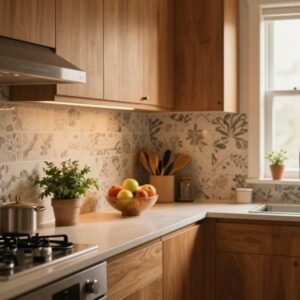
The rich chocolate brown of walnut adds a touch of elegance and modernity. If you want a kitchen that looks like it belongs in a design magazine, you can achieve that look with walnut cabinetry, matte black hardware and stone countertops. What’s worth noting is that walnut looks best in well-lit kitchens as darker woods tend to make a space feel like a dark cave.
Hard Maple is ideal for minimalist design. Its smooth finish and subtle cream colour give it a uniform appearance, allowing other elements to shine. If you have a show-stopping backsplash or lighting at the heart of your design, maple cabinets offer a subdued backdrop that allows these elements to shine.
Natural Texture and Contemporary Lines
The trick to incorporating natural wood in modern kitchen design is to achieve a balance between rustic and sterile. The secret is contrast. The natural warmth of the wood grain is offset by the geometric flat-panel doors of the cabinetry. This allows the materials to show their true colours while maintaining a modern feel.
Opt for matte rather than glossy finishes. Matte finishes will diffuse the light and show off the beauty of the wood grain, while glossy finishes will make the material look synthetic and one-dimensional. In a small kitchen, in particular, matte finishes helpMixing materials for the upper and lower kitchen cabinets is one of the most successful kitchen design trends today. One common choice is warm wood lower cabinets to anchor the kitchen and provide depth, with the upper cabinets painted in a light neutral (think warm white or light gray).
This keeps the kitchen bright and airy at eye level while grounding it with warm tones at the bottom.
Alternatively, you can use a wood on all the cabinets and play off the countertop and backsplash. Using a white quartz countertop for instance, against walnut cabinets, offers a contemporary contrast that is warm and inviting.
Hardware as the Finishing Detail
Hardware is often referred to as the jewellery of the kitchen and this is certainly true. The right cabinet pulls and knobs bring the whole look together, while the wrong ones can make even gorgeous cabinetry appear tacky.
Three hardware finishes are particularly good for warm wood tones.
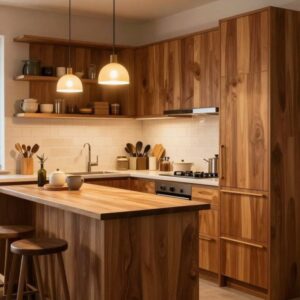
Brushed brass provides a warm, golden tone that works well with oak and maple, accentuating the wood’s warmth while still harmonising with it. Flat black provides a stylish, contemporary contrast, which is ideal for deep walnut woods, lending the kitchen an editorial feel. Satin nickel provides a simple and adaptable finish that works with any wood grain and keeps the style timeless.
As for the hardware itself, bar pulls are a good choice for L-shaped kitchens. They offer clean horizontal or vertical lines that reinforce the clean lines and simplicity of modern design.
Soft Lighting Strategies That Create Magic
When it comes to the cozy small L-shaped modern kitchen with warm wood and soft lighting, lighting is the most magical element. A kitchen that appears lackluster under fluorescent lighting can take on a new life with the right lighting. It’s not hard to get the lighting right, but it does take some planning.
The Three-Layer System
All kitchen designers agree that there are three layers of lighting essential to a well-lit kitchen: ambient lighting, task lighting and accent lighting.
Ambient lighting creates the overall light in the room. For a small kitchen, all that is needed is a single light fixture or recessed lighting. Its purpose is to remove any shadows in the room so that it is safe and easy to navigate. Take care to avoid installing a single, large central fixture, which will produce unflattering shadows and give your kitchen the feel of a hospital operating room, rather than a warm and welcoming kitchen.
Task lighting is focused illumination of the work areas: countertops, the sink and the stove. Without task lighting, shadows created by central lamps make it hard to see what you are doing when chopping veggies or reading a recipe. LED strips are the perfect way to provide task lighting in an L-shaped kitchen. They are hidden under the top cabinets and provide an even light down onto the counter.
Accent lighting will provide the touch of personality that transforms a kitchen from merely functional to beautiful. This could be small LED strips housed within glass-door cabinets, a pendant light over a small dining table or spotlights aimed at a stunning backsplash. Accent lighting is a kitchen’s heart and soul.
The Importance of Color Temperature
White light comes in many varieties, and that makes a big difference in a kitchen with warm wood tones. The temperature of light is measured in Kelvin, and the higher the Kelvin, the different the appearance.
To create a warm and inviting space where wood cabinetry looks rich and lovely, look for bulbs in the range of 2700K to 3000K. This will give you a warm white colour that is similar to the amber light emitted by incandescent bulbs.
This will create a warmer glow that enhances wood tones, makes people look healthier, and is overall softer on the eyes than other bulbs.
Be sure to avoid bulbs with a rating above 4000K in this kitchen. Daylight or cool bulbs in this range will wash out the wood tones and make the kitchen look sterile and unwelcoming – the last thing you want.
Under-Cabinet LED Strips: Affordable yet Powerful
If you’re going to invest in one type of lighting for your small kitchen, under-cabinet LED strips should be your first choice. These affordable fixtures have an outsized effect on the appearance and functionality of the kitchen. In the daytime, they deliver functional task lighting that enables safe and easy food preparation and cooking. At night, they can be dimmed to provide a softer, ambient light that makes the kitchen feel like a comforting and inviting space.
LED strips are dimmable, efficient and available in just the right warm tones for wood kitchen tones. They are also easy enough to install that many homeowners can easily DIY this project, making this an affordable kitchen upgrade.
Storage Solutions that Work
A stunning kitchen will rapidly become a nightmare if it is not functional. In a compact L-shaped kitchen, storage is a key consideration. It is an integral part of the design process, and should be considered in parallel with layout, materials and lighting.
Stacking Up with Floor-to-Ceiling Cabinets
In small kitchens, the most valuable “real estate” is the space between the top of the upper cabinets and the ceiling. Most upper cabinets only reach as high as your shoulders, leaving an unsightly gap that is an eyesore and dust-trap.
This is a problem that can be solved by putting your upper cabinets right up to the ceiling. This extra storage can be used for things you use less frequently, like out-of-season bakeware and dinnerware, or extra pantry items. But more importantly, going floor-to-ceiling creates a much larger room.
T