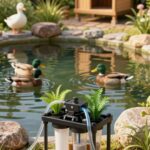
Backyard Duck Coop with a Filter That Makes Water easier to manage.
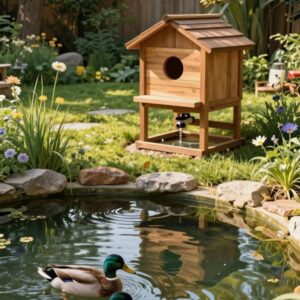
It is so happy to rear birds in your own garden. However, it can be tedious to take care of him or her every day. A frequent problem with keeping ducks in the back yard is that many owners are always cleaning muddy basins.
This hard routine may be altered by upgrading your setup. With A Backyard Duck Coop Setup With Filter That Makes Water Easier To Manage, your mornings will be significantly improved.
An excellent filtration system will keep your environment clean to your birds. It also conserves much time. Your birds will be well all year round with improved technology.
Key Takeaways
Manual cleaning operations take a lot of time but automated systems ensure that time is saved.
Suppliers of clean liquids are crucial in the prevention of prevalent avian diseases.
Adequate drainage and filtration will increase the lives of your enclosure materials.
Regular hygiene methods make the process of the owner and the bird more enjoyable.
The new upgrades will enable you to spend time on indulging your flock and not on repairs.
Overview of the Duck Water Management Challenges.
A proper management of duck water is the main element to a happy duck and a clean coop. Ducks are tough but have special needs that do not always suit the normal backyard installations. To reduce the number of chores always suit the normal backyard installations. To reduce the number of chores in a day, it is essential to learn these needs as an owner.
Why Ducks Drink so much Water
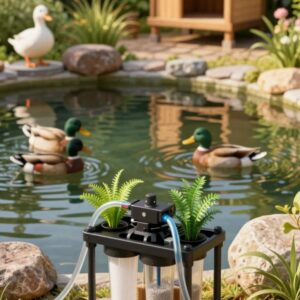
Ducks do not drink water only. They preen through cleaning their eyes, nostrils and feathers. The right way to preen is to immerse their heads in water and sprinkle the rest of the body with water to disperse the natural oils.
And your ducks will get dirty and stressed out without sufficient water. They should have their own area to preen. They are not able to maintain their feathers waterproof and warm, because they are unable to take a bath.
Effects of Dirty Water on the Duck.
Unclean water forms an environment where there are dangerous bacteria that can cause injuries to duck health. Anaerobic bacteria develop when waste accumulates in a small pool without any filter. The bacteria may result in infections such as bumblefoot and breathing problems.
It is important to have the water clean to their health. In case, ducks consume polluted water, they are at risk of internal parasites and bacterial infections. Regular filtration can be used to avoid these risks in your backyard.
Usual Errors in Traditional Duck Coop Designs.
It is a problem to many owners since their duck coop design does not accommodate duck waste. The main error is to put water sources in dirt or wood fragments without the drainage. This renders a dirty muddy environment difficult to clean.
The other error is to use small containers to take a bath. When ducks attempt to fit into small bowls, they end up splashing water everywhere causing mess. The sleeping area should not be merged with the water area; a good design must make the two to remain distinct.
Water Condition
Impact on Flock
Maintenance Level
Stagnant/Unfiltered
Great danger of disease.
Daily manual labor
Filtered/Circulated
Optimal hygiene
Low weekly maintenance
Natural Pond
Variable health
Difficult to control
How to design a backyard duck coop setup with a filter that will make it easier to manage the water.
You can save a lot of time every week by placing
in a day, it is essential to learn these needs as an owner.
Why Ducks Drink so much Water
Ducks do not drink water only.
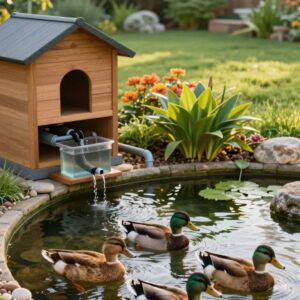
They preen through cleaning their eyes, nostrils and feathers. The right way to preen is to immerse their heads in water and sprinkle the rest of the body with water to disperse the natural oils.
And your ducks will get dirty and stressed out without sufficient water. They should have their own area to preen. They are not able to maintain their feathers waterproof and warm, because they are unable to take a bath.
Effects of Dirty Water on the Duck.
Unclean water forms an environment where there are dangerous bacteria that can cause injuries to duck health. Anaerobic bacteria develop when waste accumulates in a small pool without any filter. The bacteria may result in infections such as bumblefoot and breathing problems.
It is important to have the water clean to their health. In case, ducks consume polluted water, they are at risk of internal parasites and bacterial infections. Regular filtration can be used to avoid these risks in your backyard.
Usual Errors in Traditional Duck Coop Designs.
It is a problem to many owners since their duck coop design does not accommodate duck waste. The main error is to put water sources in dirt or wood fragments without the drainage. This renders a dirty muddy environment difficult to clean.
The other error is to use small containers to take a bath. When ducks attempt to fit into small bowls, they end up splashing water everywhere causing mess. The sleeping area should not be merged with the water area; a good design must make the two to remain distinct.
Water Condition
Impact on Flock
Maintenance Level
Stagnant/Unfiltered
Great danger of disease.
Daily manual labor
Filtered/Circulated
Optimal hygiene
Low weekly maintenance
Natural Pond
Variable health
Difficult to control
How to design a backyard duck coop setup with a filter that will make it easier to manage the water.
You can save a lot of time every week by placing
your duck coop and pond in the appropriate location. Flinty thinking results in a cheerful flock and clear water. An effective design of a duck coop is central to a stress-free backyard.Choosing the Proper Site of your Coop and Pond.
To begin with, identify the natural slope of the land you have to ensure good drainage. To avoid mud and flooding, avoid areas that contain low spots where water collects. In addition, look out for utility lines in concealed places to prevent damage.
Installation of your set-up should be close to a water body and power supply. The presence of power is essential to pumps and equipment throughout the year. It should be easy to access and therefore choose a place where the coop can be easily cleaned and eggs collected.
Install Filtration Systems in your Coop Design.
An effective DIY pond filter requires a special location. Construct a small space or a sunken box around the pond to place the filter. This makes it clean and prevents weather on the pump.
Think about how you will use your pipes. Direct and short routes between the pond and filter are the best. This saves your pump and increases efficiency. These components will save you a headache in the future by adding them at the beginning of your duck coop design.
Finding the Right Balance between Coop Space and Water Access.
Your ducks must have a simple means of passing between their pond and coop. Put gravel or wood chips in the transition zone to prevent the accumulation of muck. This maintains the coop clean and lessens pond debris.
Have the water close, but not too close, to the coop. A homemade pond filter will purify the water, though not the coop. Balance plays an important role in a healthy, care-free flock.
Selecting the Optimal Filtration Technology to Your Flock.
There are three important areas of water treatment that you should know about in order to maintain your flock. The presence of a powerful pond filtration system is essential since ducks produce a lot of waste. Use of various technologies will assist in extending the hours of the cleaning of your pond.
Installation of a Pressurized Pond filter step-by-step.
The establishment of a pond filtration system should be planned. You will need to position the pump and the plumbing in the right position. This makes sure that your system is efficient and manages duck waste.
Assembling the Materials and Plumbing Equipment required.
First, prepare everything that you require. PVC piping, flexible tubing, stainless steel clamps, and silicone sealant will be required. With these on hand, there will be no wasting of time and your duck pond plumbing will remain tight.
Ensure that your fittings fit in the pump outlet. The right adapters are essential to the smooth pond pump performances throughout the season.
Attaching Filtration Unit to the Pump.
Install the pump at the bottom of the pond to increase intake. Reinforced tubing connections it to the inlet of the filter. Make all connections sealed with double hose clamps. This is essential to prevent the leakage of air which damages your pond filtration system.
Install the filter unit in a flat and a stable position close to the pond. This facilitates the task of plumbing and assists in the maintenance in the future.
Placing the Return Line to promote optimum circulation.
The pond should have a circular movement of the return line. Turn the flow of water in the other direction of the intake. This enhances the flow of water in the pond and maintains the water clean and oxygenated.
Proper Flow Rates of Duck Ponds.
Ducks also produce more waste than fish and therefore your system must be able to handle more. Attempt to turn over the water in the pond with the filter every hour. The correct pump size to use in your pond can be found in the table below.
Pond Volume (Gallons)
Flow rate (GPH) recommended.
Pipe Diameter (Inches)
250 – 500
600 – 800
1.0
500 – 1,000
1,200 – 1,500
1.25
1,000 – 2,000
2,000 – 2,500
1.5
Solid Waste Control Before It gets to the Filter.
A pond that is clean begins with a clever plan of capturing the waste of duck pond before it gets into your apparatus. Ducks are untidy and thus cleaning up their waste at early stages saves time. This allows you to concentrate on duck pond solids at the source in order to keep your primary filtration system effective.
Adopting Settling Tanks or pre-filters.
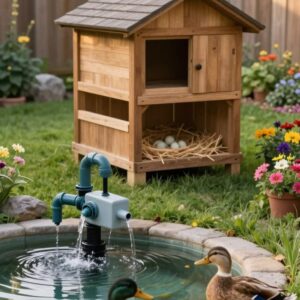
A settling tank is a water tank that decelerates the movement of water to allow heavy particles to sink. This collects feathers, grit, and manure, and then they do not strike your filter. A pre-filter screen is also installed to filter out large debris which may block your system.
Install these units in between the pond pump and the main filter. This design allows smaller particles to pass by sparing you the costly filter materials. Frequently emptying these tanks will ensure that organic matter is not accumulated to foul your water.
Removal of Surface Debris with Skimmers.
Floating feathers and leaves are examples of surface debris and may overrun a pond system in a brief time. This material is removed at the surface by a floating skimmer and sinks. This makes it not break down into smaller and harder to filter particles.
The majority of skimmers are provided with a removable basket which can be emptied on a daily basis. This is an important step in ensuring that there is a constant flow of water by keeping this basket clear. A clear surface will improve the appearance of your pond and will save your biological filter.
The significance of routinely washing the back.
Despite the finest pre-filtration, certain fine particles will be deposited in your filter media. Periodic backwashing is used to reverse the current of water so as to remove dirt and debris. This is a simple task that will restore pressure and efficiency of your system.
Without backwashing, you will clog your filter and limit water flow and oxygen availability. To maintain a healthy flock, consistency is important in keeping your water healthy. Backwash at the time you find the flow rate in your return line decreasing.
Water Quality with Natural Processes.
Mother Nature has mighty instruments to maintain your duck pond in order. With the inclusion of the biological components, you form a balanced ecosystem. This helps in the health of ducks in the long term. Such techniques do not require any additional equipment and make the environment of your ducks safer.
Use of Aquatic Plants to absorb the Nutrients.
Plants serve as filter in water. They absorb the surplus nutrients of the water. Such plants as water hyacinth or duckweed consume nitrogen and phosphorus, preventing algae blooms. This is essential to good natural pond filtration.
Plants to your pond are beneficial in many ways:
They give shades and maintain water temperatures.
Algae compete with plants and this restricts its growth.
They provide a secure hiding place to the useful insects and microorganisms.
Breaking down Waste with Beneficial Enzymes.
The waste at duck ponds may accumulate rapidly and in the corners. Enzymes that are beneficial break down organic matter that may not be broken down by mechanical systems. Such enzymes break down sludge and debris, converting them into inoffensive byproducts.
Periodically, the addition of these enzymes maintains a high quality of pond water. It averts muck accumulation on the floor of the pond. The filter media remains cleaner longer and thus water is easy to maintain clean and free of scent.
Checking pH/Ammonia Levels.
It is important to monitor your water chemistry. Excessive levels of ammonia are poisonous and radical changes of PH can be harmful to your ducks. Check your water every week to be sure your pond aeration and filtration systems are functioning properly.
When the water becomes cloudy or smelly, do a test immediately. Maintaining these levels in good health will keep your natural filtration in good operation. The trick of the successful, low maintenance backyard duck environment is consistency.
Have you Winterized Your Filed Duck Water?
In cold regio
Regular Maintenance Schedule of Busy Duck Owners.
With a regular maintenance plan, you will ensure your filtration system is in good working condition throughout the year. Regular cleaning of pond prevents accumulation of wastes. This will help maintain your ducks health and your pond in good condition.
Checks on Pump Performance Daily.
Test your pump daily water flow. In case the flow is low, then it may be blocked. This is an indication that you are in need of cleaning the intake screen.
Hear unusual sounds of the pump. A good pump is a quiet and steady one. Daily checks can prevent you spending money on repairs as they will allow noticing the problems in time.
Cleaning up Filter Media Weekly.
Ducks are messy and thus your filter media gets clogged with debris. Wash up mechanical filter pads or sponges after a week. This maintains the filter in good operation.
To clean, use pond water or dechlorinated water. Chlorinated tap water may damage the good bacteria in your filter. These microbes are essential in maintaining cleanliness of the water.
Deep Cleaning Procedures (Monthly).
Surface debris is dealt with by cleaning the surfaces on a weekly basis, and a monthly deep clean takes care of the accumulation of sludge. This is the time you would want to check the entire system. The following checklist can assist:
Backwash the filter: Turn the flow backwards to clear the bottom sediment.
Check plumbing: Check hoses and connections, wear, leaks, or mineral deposits.
Wash the skimmer: Clean the skimmer of large leaves or feathers that passed through the intake.
Parameters of test water: Check the level of ammonia and nitrates with a test kit.
Monthly maintenance will ensure that your pond is stable. It spares you time and effort. Your ducks will be pleased to be in a clean well-kept environment.
Common Problems with Duck Pond Filters Troubleshooting.
Maintaining a healthy duck pond in the backyard entails understanding how to resolve or rectify the frequent issues. In some cases, pond water quality may decline which requires immediate intervention. Being able to identify these problems promptly will ensure that your ducks are happy, and your water is clear.
Causes of cloudy or green water.
Hazy or green water indicates your filter is not doing as well. This usually indicates your pond control of algae is not effective or your biological filter is too congested. Frequent maintenance of the duck ponds assists in breaking nutrients of the water by beneficial bacteria.
Test your UV sterilizer bulb, which drops out after some time. In case it is functioning, excess sunshine may be the issue. You may require additional shade or larger biological filter.
Solutions to Low Flow or Clogged Intake Screens.
Reduction in flow of water typically implies that it is blocked by something. Ducks are messy, and duck pond debris such as feathers and excrement can clog screens. Monitor these screens once a week to ensure that water flows.
In case flow is still weak, inspect pump impeller to find debris. Minuscule objects may become lodged and lead to issues. Removal of these blockages in a short time prevents an overheating and failure of the pump.
Repairing your leaky plumbing.
There is a big issue of leaks which may be caused by loose or broken duck pond plumbing. Begin by inspecting connections and hose clamps by checking them to see whether they are wet or dry. Most leaks can be repaired by tightening or changing parts.
When you detect a crack in the pipes, you can have to replace them. Ensure that your plumbing is well-supported to prevent stress on joints. These minor repairs can make your system last several years.
Conclusion
Constructing a filtered water system to your ducks is an enjoyable undertaking. It enhances their living standards to a great extent. You have now learnt to make your environment clean with less effort.
Their health depends on your commitment to keep your ducks in a clean house. With the best brands such as OASE or Pondmaster, you are sure of a healthy and lively pond. This will take many years.
Frequent maintenance and inspections are key to success in the long run. Little things you can do every day prevent a lot of trouble in your filtration system. A properly maintained water system will save time and make your ducks happy.
You can share your experience with other duck enthusiasts so that they can become better setups. Your narratives are helpful to the community. Start your project today and have a clean, easy-to-maintenance duck pond.
FAQ
What can I do to save time that I spend manually changing the water of my duck every day?
Install a pressurized filtration system that has a high-quality pump, such as Aquascape. This semi-automatizes the process of changing water. It entangles feathers and garbage, and makes the water cleaner over a longer period.
What are the health hazards in case my duck pond water stagnates?
Stagnant water harbors bad bacteria. These may lead to severe diseases among ducks. Their well-being and health depend on clean water.
Where shall I find my duck coop and pond where they will drain right?
Select a position where there is no mud and drainage is taken into account. Close to a drain line or in a garden is the best. This simplifies maintenance.
Why does a duck pond filtration system require a settling tank?
Ducks have a lot of waste. Heavy solids are first caught in a settling tank. This eliminates clogs and decreases upkeep of the filters.
What is the benefit of UV sterilization in a backyard duck?
Algae blooms are regulated by UV sterilization. The GCTEK ZapTek UV sterilizer is used to kill microbes and algae. This prevents turbidity of the water.
Is it possible to use aquatic plants and help to keep the duck water clean?
Yes, there are plants such as water hyacinth or lilies which absorb nutrients. They are a natural filter. But, curb the ducklings of their